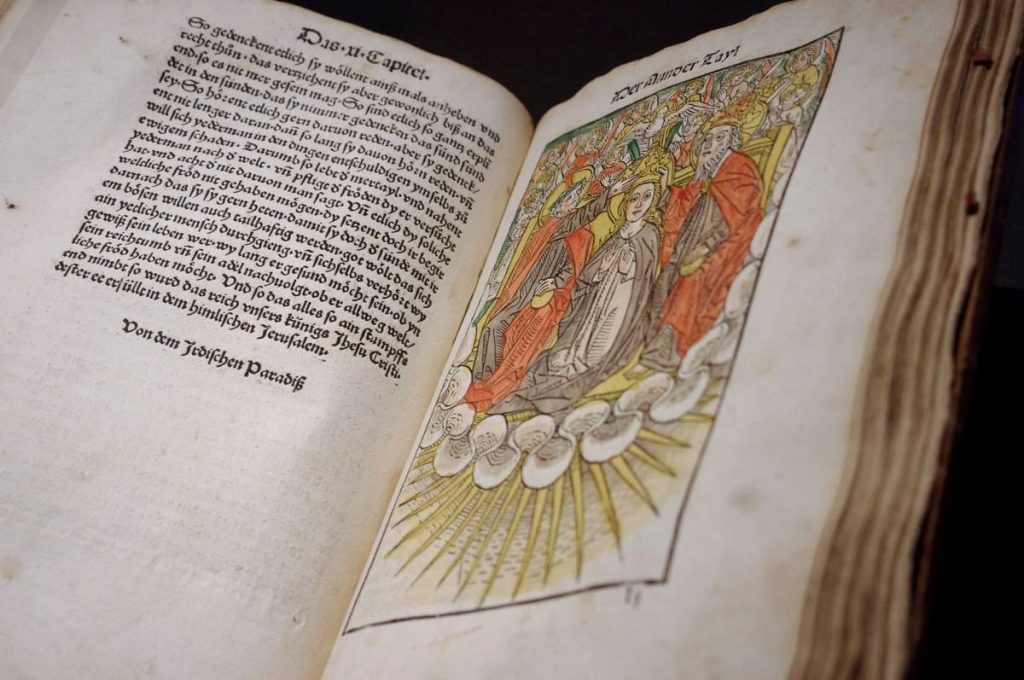
Ever stared at a fragment of Old English text and felt like you were deciphering alien runes? You’re not alone. Many students diving into linguistic history hit a wall when they assume historical linguistics is just “old words.” It’s not—it’s detective work across centuries, requiring precision, context, and yes, sometimes starting from scratch. In this guide, we’ll walk through actionable strategies to navigate the complexities of linguistic history without falling into common traps that waste time and erode confidence. Whether you’re an online learner, a curious self-starter, or prepping for advanced study, these insights will help you build authentic understanding—fast.
Table of Contents
- Why Linguistic History Is Harder Than It Looks
- Your Step-by-Step Path to Reliable Analysis
- Smart Practices That Separate Novices from Experts
- Real Cases Where Context Changed Everything
- Frequently Asked Questions
Key Takeaways
- Historical linguistics demands contextual awareness—not just vocabulary recall.
- Starting from scratch requires structured methodology, not guesswork.
- Misreading sound changes or manuscript conventions leads to major errors.
- Trusted resources like the Oxford English Dictionary and university archives are non-negotiable.
- Your interpretation must account for scribal variation, dialect, and time period.
Why Linguistic History Is Harder Than It Looks
I once spent three weeks analyzing a supposed “early Middle English” phrase, only to discover it was a 19th-century forgery inserted into a digital archive. Embarrassing? Absolutely. But it taught me a brutal truth: linguistic history isn’t about memorizing dates—it’s about verifying every assumption. Online education democratizes access, but it also floods learners with unvetted sources. Without critical filters, you might mistake reconstructed Proto-Germanic forms for attested Old English, or confuse West Saxon with Anglian dialects.

This confusion matters because language doesn’t evolve in a vacuum. As the University of Oxford’s Faculty of Linguistics notes, “Sound shifts like Grimm’s Law operate systematically—but only if you apply them to the correct chronological layer” (Oxford Linguistics). Miss that layer, and your entire analysis collapses.
Your Step-by-Step Path to Reliable Analysis
1. Identify the Time Period First
Old English spans roughly 450–1150 CE. Don’t treat it as one monolith. Early West Saxon (c. 800) differs significantly from Late West Saxon (c. 1000). Pinpointing the century prevents anachronistic assumptions.
2. Use Digitized Primary Sources
Rely on trusted repositories like the British Library’s digitized manuscripts or the Parker Library’s corpus. These provide high-resolution scans with metadata.
3. Cross-Check with Etymological Dictionaries
The Oxford English Dictionary (OED) traces word histories with citations. If your source claims “fæder” meant “priest” in 900 CE, the OED will confirm or refute it instantly.
4. Map Sound Changes Systematically
Apply known shifts like i-mutation or palatalization only after confirming your text’s dialect and era. A misplaced “c” could be /k/ or /tʃ/—context decides.
Smart Practices That Separate Novices from Experts
- Never trust OCR without verification: Optical character recognition often misreads thorn (þ) as “th” or yogh (ȝ) as “g.” Always compare against facsimiles.
- Build a glossary per manuscript: Words shift meaning even within centuries. Track usage in your specific source.
- Avoid modern syntactic assumptions: Old English is verb-second in main clauses—a structure foreign to Modern English speakers.
- Join academic forums: Sites like Linguist List offer peer feedback before you publish flawed conclusions.
And here’s a terrible tip you’ll hear way too often: “Just translate word-for-word using Google Translate.” Please don’t. Machine translation has zero competence in dead languages—and applying it to linguistic history historical old english scratch guarantees nonsense.
Real Cases Where Context Changed Everything
In 2018, a graduate student re-examined the Exeter Book riddle “Ic wiþ muþe sprece” (“I speak with my mouth”). Earlier translations rendered it as a “pen,” but by analyzing ink composition, scribal hand, and contemporary metaphors, scholars now argue it refers to a bell—its “mouth” being the clapper cavity. The breakthrough came not from vocabulary alone, but from integrating archaeological data with linguistic evidence.
Similarly, the shift from “cwēn” (woman) to “queen” involved Norse influence during the Danelaw period—a detail invisible without historical context. This is why studying linguistic history historical old english scratch demands interdisciplinary rigor. Our team at David Eves Books emphasizes this blend in our curriculum because accuracy builds authority.
Frequently Asked Questions
What’s the difference between historical linguistics and etymology?
Etymology traces individual word origins; historical linguistics studies systematic language change—including phonology, syntax, and sociolinguistic factors across time.
Can I learn Old English without knowing Germanic languages?
Yes, but expect a steeper climb. Focus on core grammar patterns first. Resources like the Old English Aerobics textbook (University of Michigan) scaffold beginners effectively.
How do I verify if a digital text is authentic?
Check its provenance: Does it cite a physical manuscript shelfmark (e.g., “Cotton Vitellius A.xv”)? Reputable sites like the British Library or Digital Corpus of Old English always do.
Why does dialect matter in Old English?
West Saxon became the literary standard, but Mercian and Northumbrian had distinct vowel shifts. Ignoring dialect leads to misreading sound laws.
Is “linguistic history historical old english scratch” a real academic term?
No—it’s a keyword phrase combining search intent. Academics say “diachronic analysis of Old English” or “reconstructive philology.” But learners often search exactly this string, so clarity matters.
Where can I get help with my research?
If you’re stuck reconstructing a passage or verifying a source, reach out via our Contact Us page. We respond to scholarly inquiries weekly. (And yes, we honor your privacy—see our Privacy Policy.)
Remember: language isn’t a museum piece—it’s a river. To study its currents, you must stand where it flows, not where you wish it had. Now go parse responsibly.