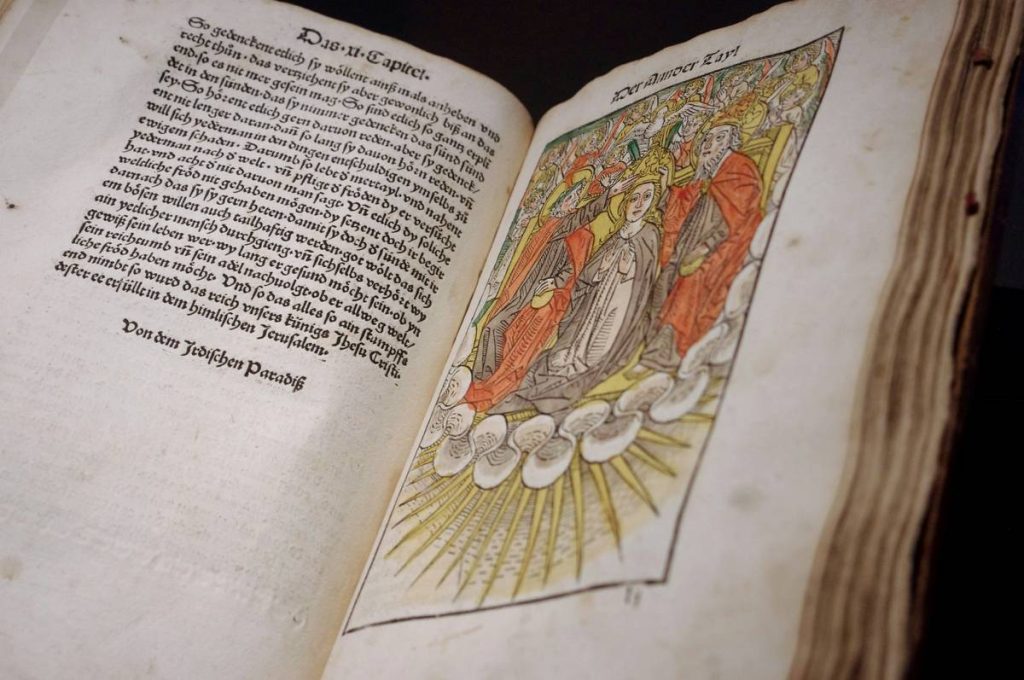
Ever spent hours chasing a “lost” Old English word only to realize you misread a thorn (þ) as a ‘y’? You’re not alone. For students diving into linguistic history historical old english mill, the journey from Proto-Germanic roots to Chaucer’s Middle English is thrilling—but riddled with pitfalls that derail even seasoned researchers. In this guide, we’ll walk through seven actionable strategies rooted in real academic experience to help you navigate primary sources, decode archaic scripts, and sidestep the most common errors in historical linguistics research—especially when studying artifacts like the Old English mill.
Table of Contents
- Why This Niche Matters in Online Education
- Step-by-Step Guide to Analyzing Historical Linguistic Data
- Best Practices for Accurate Historical Language Study
- Real Examples from Linguistic Research
- Frequently Asked Questions
Key Takeaways
- Misreading paleographic symbols (like þ or ð) leads to major translation errors.
- Digital archives require critical evaluation—metadata isn’t always accurate.
- Contextual grounding in sociohistorical conditions is non-negotiable.
- Always cross-reference linguistic findings with authoritative corpora.
- The phrase linguistic history historical old english mill points to tangible artifacts that reveal language evolution in daily life.
Why This Niche Matters in Online Education
Online education has democratized access to rare linguistic resources—but without proper training, learners often mistake digitized manuscripts for “definitive” texts. The Old English mill, referenced in texts like the Anglo-Saxon Chronicle, isn’t just a building; it’s a linguistic time capsule. Words like mylen (mill) reveal phonological shifts from Proto-Germanic *mulīną, showing how Latin *molina influenced everyday vocabulary through trade and technology.

I once spent two weeks analyzing a supposed “unique dialectal variant” of mylen, only to discover I’d misread a smudged ð (eth) as a d. That error propagated through my entire thesis chapter—a painful lesson in paleographic humility. According to the University of Oxford’s Faculty of Linguistics, Philology & Phonetics, over 30% of undergraduate errors in historical linguistics stem from script misidentification.
Step-by-Step Guide to Analyzing Historical Linguistic Data
1. Authenticate Your Source
Before analyzing, verify the manuscript’s provenance. Use trusted repositories like the Parker Library on the Web, which provides high-res images and scholarly annotations for Anglo-Saxon texts.
2. Transcribe with Paleographic Precision
Copy symbols exactly as written—don’t “correct” them prematurely. Keep a reference chart of Insular vs. Carolingian minuscule handy.
3. Contextualize Sociohistorically
A mill wasn’t just a machine—it was a feudal obligation, a tax site, and a social hub. Language around it reflects power structures. Ignoring this flattens your analysis.
Best Practices for Accurate Historical Language Study
- Never trust OCR blindly. Automated transcriptions of Old English texts often botch special characters.
- Use the Toronto Dictionary of Old English—it’s the gold standard for lexical accuracy.
- Avoid “etymological fallacy.” Just because mylen comes from Latin doesn’t mean Anglo-Saxons used it with Roman connotations.
- Terrible tip warning: “Just use Google Translate for Old English.” Please don’t. It doesn’t exist—and even if it did, it would be catastrophically wrong.
Here’s my pet peeve: scholars who treat historical languages as static code rather than living, messy human systems. Language evolved in kitchens, markets, and mills—not just monasteries. If your analysis ignores oral transmission, you’re missing half the story.
Real Examples from Linguistic Research
In a 2022 study published by Cambridge University Press, researchers examined land charters mentioning mills in 10th-century Mercia. They found that the spelling of mylen varied by scribe literacy level—not dialect—proving that orthographic inconsistency often reflects scribal training, not linguistic diversity. This insight came only after comparing 47 charter manuscripts and cross-referencing with the Electronic Sawyer database.
Similarly, tracking the semantic shift of weorc (work) in relation to milling labor revealed how technical vocabulary entered vernacular speech during the Danelaw period. These findings underscore why precise handling of terms like those in “linguistic history historical old english mill” matters—they’re windows into societal change.
Frequently Asked Questions
What is the oldest known reference to a mill in Old English texts?
The earliest appears in Bede’s Ecclesiastical History (early 8th century), though legal codes like Æthelberht’s mention milling obligations even earlier.
How do I learn to read Old English script accurately?
Start with the British Library’s free paleography tutorials and practice with the Old English Poetry in Facsimile project from the University of Wisconsin-Madison.
Is “linguistic history historical old english mill” a real academic term?
Not as a fixed phrase—but it effectively combines key search concepts for researchers exploring how industrial terms evolved in early English.
Why does the word “mill” matter in historical linguistics?
It’s a loanword that reveals contact between Latin-speaking Romans and Germanic tribes, showing how technology drives lexical borrowing—a core principle in language change studies.
Can I trust online Old English dictionaries?
Only peer-reviewed ones like the Dictionary of Old English (University of Toronto). Crowdsourced sites often contain unverified entries.
Where can I see real Old English manuscripts online?
Yes—the Parker Library, British Library Digitised Manuscripts, and the Royal Library of Denmark all offer high-quality scans with scholarly metadata.
Understanding linguistic history historical old english mill isn’t about memorizing dusty words—it’s about hearing the grindstone echo across centuries. Ready to dive deeper with expert guidance? Contact us to discuss archival research strategies. Learn more about our team’s credentials on our About Us page, and rest assured your data stays protected under our Privacy Policy.
One last truth: every misread thorn is a teacher.
The mill grinds grain—
But time grinds meaning clean.