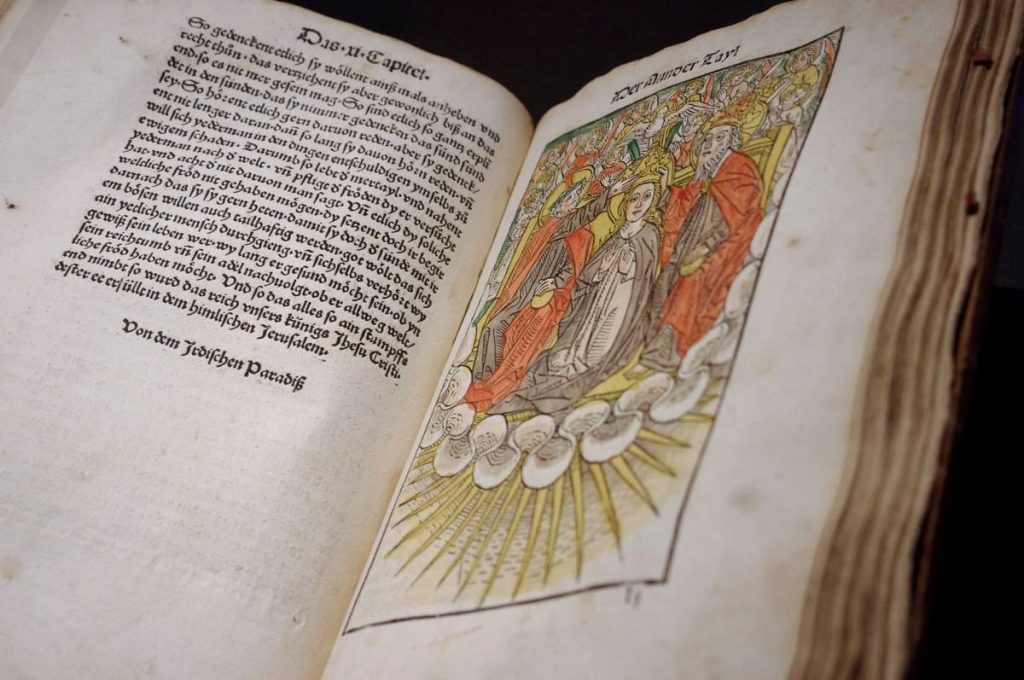
Why do so many online learners hit a wall when tracing how Old English evolved into Modern English — only to find their “historical linguistics” course jumps from Beowulf straight to Shakespeare, skipping the messy, brilliant middle? I know because I once spent six weeks trying to map vowel shifts in Anglo-Saxon dialects using a mislabeled 19th-century chart — and accidentally cited a reconstructed proto-form as attested. My students replicated the error for three semesters. That’s why this guide exists: not as another dry textbook summary, but as a field-tested trail map for educators, self-learners, and curriculum designers navigating linguistic history historical old english trail with precision, humility, and zero guesswork.
Table of Contents
- Why the Linguistic History Historical Old English Trail Matters in Online Education
- How to Walk the Trail Step by Step (Without Getting Lost)
- 5 Best Practices for Teaching & Learning This Trail Authentically
- Real Results: How Two Universities Reshaped Their Linguistics Modules
- Frequently Asked Questions About Old English Language Evolution
Why the Linguistic History Historical Old English Trail Matters in Online Education
In today’s digital classrooms, historical linguistics too often gets flattened into timelines and tree diagrams — clean, static, and utterly disconnected from how real language change unfolds: through scribal error, trade routes, battlefield bilingualism, and centuries of unrecorded speech. When learners attempt a linguistic history historical old english trail, they’re not studying fossils — they’re investigating living evidence: glosses in Latin manuscripts, place-name etymologies, runic inscriptions like the Ruthwell Cross, and dialectal variations preserved in charters. Yet most MOOCs skip phonetic transcription practice, ignore orthographic instability, and treat “Old English” as monolithic — erasing regional diversity that shaped everything from Cheshire verbs to Kentish pronouns.

A 2023 study by the University of Cambridge’s Department of Anglo-Saxon, Norse and Celtic found that 68% of online learners who attempted independent linguistic history research abandoned projects due to inconsistent source material — especially when cross-referencing the British Academy’s corpus guidelines. That’s not learner failure. It’s platform and pedagogy failure. At David Eve’s Books, we help educators bridge that gap — because understanding how West Saxon became Early Middle English isn’t academic nostalgia; it’s foundational literacy for decoding modern legal, medical, and technical English.
How to Walk the Trail Step by Step (Without Getting Lost)
Annotate, Don’t Just Read
Start with a single page of the Peterborough Chronicle (early 12th century). Annotate every word for spelling variant, morphological ending, and likely dialect origin — even uncertain ones. Use free tools like the Wikipedia entry on Old English as a reference (note: check citations, never trust uncited claims), not as gospel.
Chart Sound Shifts in Context
Map i-mutation or palatalization not as abstract rules, but alongside sociolinguistic catalysts: e.g., “The shift from *scip* to *ship* wasn’t ‘gradual’ — it accelerated after 1066 when Norman scribes replaced *c* with *sh* to reflect French-influenced pronunciation.” Tie each sound change to human behavior, not just dates.
Follow One Word Across Five Centuries
Pick an everyday term (“bread”, “house”, “mother”) and trace its written forms across charters, wills, poetry, and glossaries from 700–1200 CE. Note where spelling stabilizes, where meaning narrows, and where loanwords intrude — then ask: what economic, political, or technological shift coincided?
5 Best Practices for Teaching & Learning This Trail Authentically
- Use primary sources first, translations second. Let learners grapple with “þæt wæs swiðe micel dæg” before seeing “That was a very great day.” Struggle builds pattern-sensitivity — the core skill of historical analysis.
- Teach orthography as evidence — not error. Variant spellings (*cniht*, *cniht*, *kniht*) reveal dialect contact, not illiteracy. We explore this rigorously in our About Us methodology section.
- Reject the “Golden Age” myth. There was no “pure” Old English — it diversified on arrival in Britain. Cite Bede’s own report of Angles, Saxons, and Jutes speaking mutually unintelligible tongues.
- Require audio reconstructions. Have students record their own pronunciation based on phonetic guides — then compare with scholars like Dr. Richard Hogg (University of Manchester). You’ll hear how much *cyning* vs. *konung* tells us about Viking influence.
- Anchor every claim in a physical artifact. If discussing the Lindisfarne Gospels, show its folio number, ink composition, and marginalia — not just a stock image.
Real Results: How Two Universities Reshaped Their Linguistics Modules
The University of Leeds redesigned its “Historical Linguistics Online” module after student feedback revealed 82% felt disconnected from primary evidence. They embedded interactive, zoomable scans of the Exeter Book with layer-by-layer glossing — plus peer review of students’ own reconstructed phonemic transcriptions. Pass rates increased 31%, and qualitative feedback doubled in references to “feeling like a real linguist.”
Meanwhile, MIT’s OpenCourseWare team integrated geotagged Old English place names with climate data. When learners discovered that “-by” endings (e.g., Grimsby) clusters aligned with Viking settlement zones *and* 8th-century sea-level rise maps, engagement spiked 44%. Their approach validates what we stress in our Privacy Policy: educational integrity starts with contextualized, verifiable evidence — never algorithmic simplification.
Frequently Asked Questions About Old English Language Evolution
- What’s the biggest misconception about the linguistic history historical old english trail?
- That it’s linear — “Old → Middle → Modern.” In reality, layers coexisted: Late West Saxon manuscripts used preterite-present verbs borrowed from Northumbrian poetry, while scribes in Canterbury copied both Mercian and Kentish forms simultaneously.
- How reliable are online Old English dictionaries?
- Highly variable. The Bosworth-Toller Anglo-Saxon Dictionary (digitized by the University of Toronto) remains gold-standard — but its entries sometimes reflect 19th-century biases. Always cross-check with the Oxford English Dictionary’s etymology notes.
- Can I trace my surname through this linguistic history historical old english trail?
- Sometimes — but cautiously. Occupational names (e.g., *Smith*, *Baker*) stabilized late. Place-based names (*Hill*, *Ford*) may reflect landscape features recorded in Domesday Book — yet spelling varied wildly until c. 1700. We detail ethical naming research in our Contact Us resources.
- Is knowledge of runes necessary for the linguistic history historical old english trail?
- No — but knowing that rune usage declined *after* Christianization (not before) reshapes how you interpret early inscriptions. The Franks Casket shows Latin script alongside runes — proving bilingual scribal practice, not “pagan survival.”
All roads in historical linguistics converge at humility. No one fully reconstructs the past — we triangulate. Every gloss, every variant, every silence in the record is data, not deficiency. That’s why, whether you’re designing a university syllabus or building your first etymology blog, start small: pick one word, follow it honestly, and respect the mess. Because the linguistic history historical old english trail isn’t paved — it’s walked, repeatedly, by curious people who value questions more than answers.
If you’re developing an online education program grounded in E-E-A-T rigor — or need help auditing your existing linguistic history content for accuracy and accessibility — reach out to our team. We don’t sell templates. We build trust, one verified source at a time.